

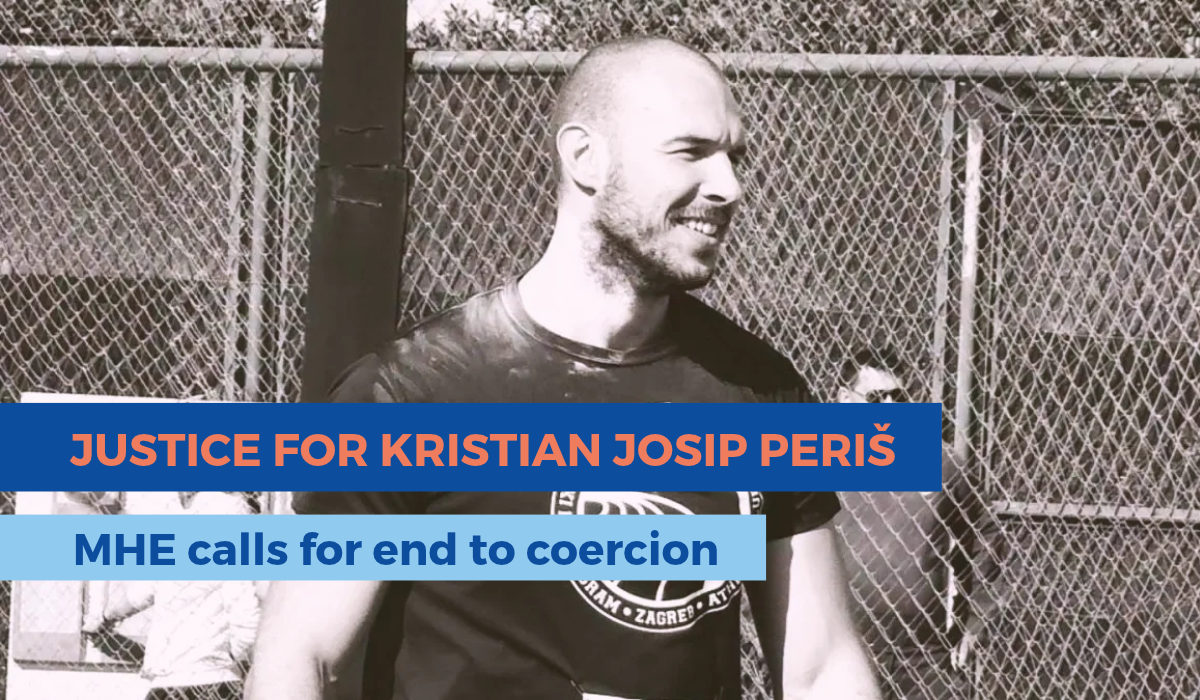
32-year old man dies following severe violence in Croatian psychiatric facility: MHE calls for justice and urgent action to end coercion
For immediate release
Brussels, 16 November 2026
Mental Health Europe (MHE) expresses its shock and profound concern following reports of the death of Kristian Josip Periš, a 32-year-old former national athlete, kinesiologist and para-sport coach, at the Sveti Ivan Psychiatric Clinic in Zagreb, Croatia.
On 21 October 2026, Kristian died while receiving psychiatric care. According to Croatian media reports describing surveillance footage, he was subjected to severe physical violence while being restrained by hospital staff. Reports describe repeated blows, physical immobilisation and the use of a pillow over his head. Four nurses have been placed in pre-trial detention on suspicion of aggravated murder. The final cause of death has not yet been established.
Mental Health Europe unequivocally condemns the reported violence and extends its deepest condolences to Kristian’s family, friends and loved ones. We call on the Croatian authorities to ensure a swift, thorough, transparent and independent investigation into the circumstances surrounding his death, including the actions of those involved and any failures of institutional oversight.
A tragedy that raises urgent questions about coercion in mental healthcare
The circumstances surrounding Kristian’s death raise profound concerns about the safety, dignity and fundamental rights of people in psychiatric hospitals, particularly when subjected to restraint and other coercive measures.
Physical restraint places people in situations of extreme vulnerability, where they may be unable to protect themselves or exercise control over what happens to them. Beyond the risks of physical and psychological harm, such practices can undermine the trust and therapeutic relationships on which effective mental healthcare depends.
Mental health services have a responsibility to protect the people in their care. No person should face violence, degrading treatment or violations of their fundamental rights in a setting intended to provide support and recovery.
Kadri Soova, Director of Mental Health Europe, said:
“Kristian Josip Periš entered a mental health facility where he should have been treated with care, dignity and respect. Instead, the circumstances of his death raise deeply disturbing questions about what happens when people are deprived of control over their own bodies and placed in situations of extreme vulnerability.”
Karilé Lévickaité, President of the MHE Board, added:
“This tragedy is a painful reminder of why Europe must confront the continued use of coercion in psychiatric care. We cannot claim to be building rights-based mental health systems while continuing to accept practices that put people’s autonomy, dignity and safety at risk.”
Europe must move towards eliminating coercion
Kristian’s death comes amid longstanding concerns about the use of coercive measures in psychiatric settings across Europe.
At the European advocacy level, Mental Health Europe has consistently opposed the draft Additional Protocol to the Oviedo Convention concerning involuntary placement and treatment in mental healthcare. Alongside disability and human rights organisations, MHE has warned that the proposed instrument risks reinforcing coercive practices rather than supporting the transition towards rights-based, person-centred and community-based mental health services.
Croatian law already contains the safeguards set out in the draft Additional Protocol, yet they did not prevent what happened to Kristian.
“Through the #WithdrawOviedo campaign, we continue to call on the Council of Europe to abandon the draft Additional Protocol to the Oviedo Convention, which risks reinforcing coercive practices rather than moving us towards their elimination. Europe must choose a different path: one grounded in human rights, informed consent and respect for every person’s will and preferences,” Kadri Soova added.
As a concrete step towards reducing and eliminating coercion, Mental Health Europe calls on the Croatian Government to vote against the draft Additional Protocol in the Council of Europe and to support its withdrawal.
We also stand alongside Croatian mental health and disability rights organisations calling for independent scrutiny, stronger safeguards, transparency around the use of restraint and concrete action to reduce and ultimately eliminate coercion. We urge the Croatian Government to look beyond this individual case and commit to systemic, long-term measures to reduce and eliminate coercion in mental health services, with a clear, time-bound plan developed together with people with lived experience and their representative organisations.
Kristian deserved care, dignity and protection. So does every person who enters a mental health facility.
Mental Health Europe calls for justice, accountability and meaningful reform to ensure that mental healthcare across Europe is grounded in human rights, safety and respect for every individual.
###
For more information contact:
Nabil Sanaullah, MHE Communications Manager
Phone: +32 2 329 00 29 – Email: n.sanaullah@mentalhealtheurope.org – Web: www.mentalhealtheurope.org
Notes to editors:
- Mental Health Europe is the main independent European non-governmental network organisation committed to the protection of the rights of persons with psychosocial disabilities, the promotion of positive mental health, the prevention of mental distress, and the improvement of mental health care and social inclusion.
- #WithdrawOviedo is a Civil Society coalition led by Mental Health Europe and the European Disability Forum that monitors work within the Council of Europe to ensure that human rights standards are safeguarded across Europe. Website available here.
Stay connected
Get our latest news, personal stories, research articles, and job opportunities.

