Mental Health Europe heads back to Gastein: putting mental health at the heart of Europe’s health future
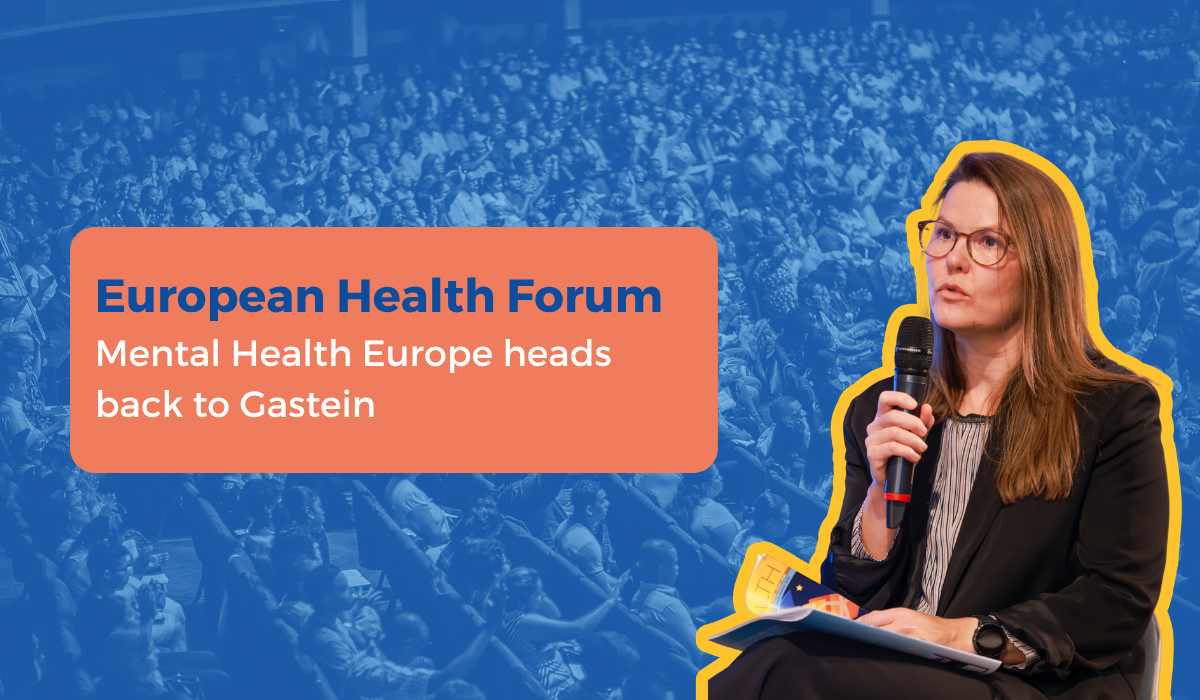
Mental Health Europe is heading back to the European Health Forum Gastein (EHFG), taking place from 29 September to 2 October, to join conversations on the future of health and wellbeing in Europe.
This year’s Forum comes at an important moment. From the climate crisis and demographic change to rapidly evolving technologies and growing political polarisation, Europe faces challenges that increasingly test our health systems, communities and collective resilience.
The message from Gastein this year is clear: health should not be seen simply as a cost, but as an investment in Europe’s future.
For Mental Health Europe, that also means ensuring mental health is not treated as a separate conversation. Mental wellbeing is closely connected to our physical health, living conditions, communities and experiences, and needs to be reflected across health policy.
MHE Director Kadri Soova will bring this perspective to two sessions at this year’s Forum, exploring both the often-overlooked mental health impact of chronic conditions and the opportunities and challenges presented by digital mental health tools.
Digital mental health: innovation that works for people
MHE Director Kadri Soova will first join the session Digital mental health in Europe: Mind the app on Thursday, 1 October, from 09:00–10:00.
Digital mental health tools are becoming an increasingly important part of Europe’s health landscape, offering applications ranging from resilience building and diagnostic support to therapeutic interventions and telemedicine.
But their growing role also raises important questions. How do we know whether an app is safe and effective? What standards should apply? How much digital health literacy is required to use these tools effectively? And how can Europe ensure that digitalisation improves access to support rather than creating new inequalities?
Drawing on a comparative assessment of mental health apps across Europe, the session will explore differences in regulation, quality standards, approval and reimbursement, alongside potential red flags when such tools are prescribed or recommended.
For MHE, innovation must ultimately serve people. Digital tools can complement mental health support, but technology alone cannot replace accessible, quality, human-centred services. Ensuring their safe, effective and equitable use must therefore be central to Europe’s approach to digital mental health.
The invisible mental health burden of chronic conditions
Kadri will also be a part of the session: The invisible burden of mental health on non-communicable diseases: Collaborative care and atopic eczema.
Chronic physical conditions can have a profound impact on mental wellbeing. Up to 30% of people living with chronic conditions experience depression or anxiety, while among people living with atopic eczema, mental health issues may affect up to half of patients — yet few receive psychological support.
The session will explore how Europe can better recognise this relationship and integrate collaborative care into EU health policies, including as policymakers begin looking beyond the current EU Healthier Together initiative on non-communicable diseases.
MHE will emphasise the importance of moving away from fragmented approaches to health. People do not experience their physical and mental health separately, and our health systems should reflect that reality.
Healthier people, a stronger Europe
Both discussions reflect a much broader question at the heart of this year’s EHFG: what kind of European Health Union do we need for the future?
Recent crises have demonstrated the limits of fragmented responses and the importance of solidarity, cooperation and investment in health. As negotiations around the next EU Multiannual Financial Framework continue, protecting and promoting health — including mental health — must remain a European priority.
Building resilient societies requires more than responding when people become unwell. It means investing in prevention, tackling health inequalities, strengthening community-based support and recognising the social and environmental factors that shape our wellbeing. It also means ensuring that innovation strengthens rather than replaces the human and rights-based foundations of good mental healthcare.
The European Health Forum Gastein provides an important space for policymakers, civil society, health professionals, people with lived experience and other stakeholders to come together around these challenges and, crucially, explore solutions.
Mental Health Europe looks forward to contributing to those conversations in Gastein and continuing to make the case for a Europe where mental health is protected, promoted and valued as an integral part of health and wellbeing for all.
Stay connected
Get our latest news, personal stories, research articles, and job opportunities.