Building More Resilient Cities: Mental Health Europe in Ljubljana for SONAR-Cities
Designing Crisis Preparedness With Communities, Not Just For Them
When a crisis hits — whether it’s flooding, a pandemic or another emergency — not everyone is affected in the same way. People facing poverty, discrimination, disability or chronic illness often experience the deepest and longest-lasting impacts, including on their mental health.
How can cities prepare in ways that truly protect everyone?
This is the driving question behind SONAR-Cities, a European project bringing together 12 partners from 8 countries to strengthen cities’ resilience in health emergencies and disasters.
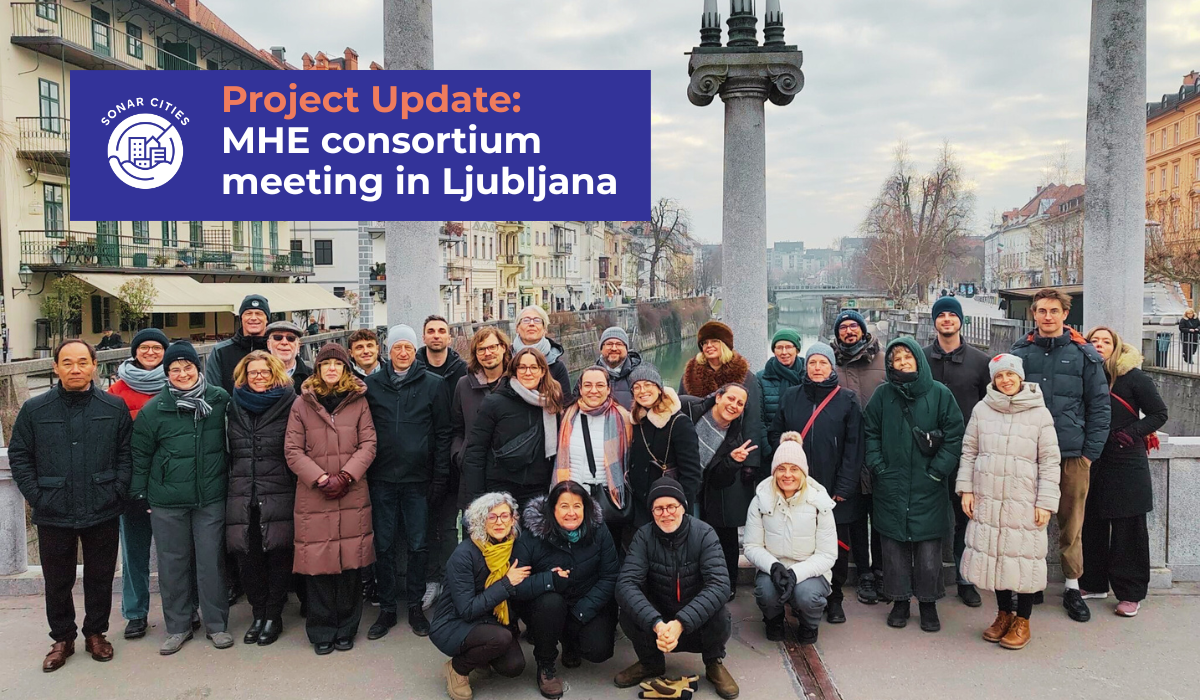
From 21–23 January, Emanuela Del Savio, MHE Project Officer, and Nabil Sanaullah, MHE Communications Manager, represented Mental Health Europe (MHE) at the consortium meeting in Ljubljana, Slovenia — a key moment as the project moves into its next phase.
What is SONAR-Cities about?
SONAR-Cities aims to help cities develop practical, community-based preparedness tools that take into account social and health vulnerabilities.
Rather than applying one-size-fits-all crisis plans, the project focuses on people who are most at risk of being marginalised — whether due to income, age, gender, racialised identity, disability or chronic illness.
Because resilience is not just about infrastructure. It’s about fairness, inclusion and trust.
MHE’s role: Co-Creation
Mental Health Europe plays a central role in ensuring that the project’s tools are genuinely inclusive.
Our expertise in co-creation helps shift crisis preparedness away from top-down decision-making and toward shared solutions shaped by those most affected.
At the heart of this approach are the Co-creation Stakeholder Boards (CSBs) established in each pilot city.
So what are CSBs?
They are spaces where:
-
People with lived experience of crisis or vulnerability
-
Community organisations and NGOs
-
Frontline responders and practitioners
-
Local authorities and institutional actors
come together on equal footing.
Each CSB acts as a bridge between lived experience and institutional knowledge — ensuring that no single perspective dominates. In October 2025, MHE trained two facilitators per pilot city to help establish and guide these boards locally, supporting inclusive and balanced dialogue from the start.
CSBs represent the heart of the SONAR-Cities approach: preparedness is designed with communities, not for them.
Why Ljubljana mattered
The meeting in Ljubljana marked the transition from analysing vulnerabilities to actively shaping and adapting preparedness tools together with local stakeholders.
Discussions were grounded in real-life experiences, including reflections from local policymakers and crisis responders on recent flooding in the city. These conversations reinforced why inclusive planning matters — especially for protecting mental health during emergencies.
Why this matters to all of us
Crises will continue to affect cities across Europe. Climate change alone is increasing the frequency and intensity of extreme events.
The real question is: who gets included in the planning?
When preparedness strategies ignore those at the margins, inequalities deepen. But when lived experience is valued alongside institutional expertise, cities become stronger and more resilient for everyone.
Through SONAR-Cities, Mental Health Europe is working to ensure that mental health, equity and community voices are not an afterthought in crisis response — but a foundation.
Because no one should be left behind when it matters most.
Stay connected
Get our latest news, personal stories, research articles, and job opportunities.