Call for expert – Research & report on deinstitutionalisation and psychosocial disabilities in Europe
Mental Health Europe (MHE) is seeking an expert to support the development of a study on deinstitutionalisation (DI) and psychosocial disabilities in Europe, exploring how mental health systems and disability-inclusive policies can be better aligned at the EU level.
The study will analyse the barriers to deinstitutionalisation that persons with psychosocial disabilities face and how the conceptual framework may differ, assess relevant EU policy frameworks, examine key challenges- including the role of mental health systems- and formulate concrete recommendations to support more inclusive, rights-based approaches across Europe.
Candidates are invited to respond to this call by the 8 May by sending their proposal to MHE Policy Manager Camille Roux at recruitment@mentalhealtheurope.org The selection of the expert will be completed by the 15th May and the selected candidate should be ready to start the assignment no later than the 1st June and complete it by 30th September.
About Mental Health Europe
Mental Health Europe is the largest European independent network organisation representing mental health users, their families and carers, health professionals and service providers in over 30 countries across Europe. MHE has been working for over 35 years to promote positive mental health, prevent mental distress and advocate for social inclusion and the protection of the rights of persons with psychosocial disabilities. MHE promotes the psychosocial model of mental health, according to which mental ill-health is a human experience and is influenced by a variety of factors including wider socio-economic and environmental issues (e.g., access to employment, education, living conditions, etc.).
MHE’s work is underlined and guided by key international and European frameworks such as the CRPD. A human rights-based approach to mental health and disability is founded on the principle that people with disabilities, including people with psychosocial disabilities, must fully enjoy their human rights. MHE advocates for the full inclusion in society of persons with psychosocial disabilities without discrimination and on an equal basis with others.
Background information
Independent living and inclusion in the community are cornerstones of the UN Convention on the Rights of Persons with Disabilities (UNCRPD), reflected at EU level in the European Strategy on the Rights of Persons with Disabilities. However, when it comes to psychosocial disabilities, deinstitutionalisation (DI) remains complex and contested, as it directly intersects with the organisation of mental health systems.
Mental health systems are typically medically dominated, centred on diagnosis and treatment, and legally empowered to use coercion. A key source of confusion in the DI debate lies in the lack of distinction between inpatient psychiatric care and long-term placement in residential institutions. While both may be described as “psychiatric service”, they serve fundamentally different purposes: inpatient services respond to acute mental health needs through short-term therapeutic interventions, whereas long-term residential institutions provide accommodation and often operate within social care systems.
DI does not aim to eliminate hospital-based care, but to close long-term residential institutions and rebalance systems towards community-based support. Misconceptions around this distinction contribute to resistance among policymakers and professionals.
This study will explore how DI can be effectively applied to psychosocial disabilities by promoting a continuum of care and support, where community-based services are prioritised, inpatient care is limited and non-institutional, and crisis responses are rights-based and non-coercive.
A central concept explored in the study will be the development of a continuum of care and support in mental health, understood as a balanced system combining:
- Community-based (outpatient) support as the primary entry point
- Short-term, integrated inpatient care when needed
- Rights-based, non-coercive crisis responses
- Strong links to social support systems (e.g. housing, employment)
Scope of the study:
This study aims to:
- Clarify how deinstitutionalisation applies to psychosocial disabilities
- Analyse key systemic and policy challenges, including the role of mental health systems
- Provide actionable recommendations to support the inclusion of psychosocial disabilities in DI strategies at EU and national level
- The study is intended as a targeted policy-oriented analysis, contributing to advocacy efforts and informing future EU initiatives on deinstitutionalisation.
Scope of assignment
Overall task:
The external consultant will be responsible for drafting a comprehensive study on deinstitutionalisation and psychosocial disabilities in Europe, based on a predefined structure.
The study will be based primarily on desk research and limited stakeholder consultation and will serve as a key advocacy and policy tool. It should not exceed 20-25 pages.
Description of tasks:
- Conduct targeted desk research on deinstitutionalisation for persons with psychosocial disabilities;
- Review relevant EU policy frameworks, identifying key gaps in relation to psychosocial disabilities;
- Analyse systemic and policy challenges, including the role of mental health systems;
- Integrate selected European examples (e.g. Italy, Finland, United Kingdom);
- Conduct a limited number of stakeholder consultations (to be agreed with MHE Policy Team);
- Draft and finalise a comprehensive report (20-25 pages) based on the following indicative structure:
- Introduction and background
- Rethinking deinstitutionalisation in mental health
- Why psychosocial disabilities require specific attention
- Systems perspective (health, social support, housing, employment)
- European illustrations : country examples
- Implications for EU policy
- Making DI work in practice (including continuum of care and support)
- Policy recommendations and conclusions
Budget and deliverables
The maximum budget planned for this assignment is €7,000 including VAT.
Please find below a list of milestones and deliverables and their indicative timeline. The final timeline will be agreed with the selected expert.
| Deliverables (D) and milestones (M) |
| M1. Preparatory meeting with MHE Secretariat and agreement on structure and outline. Upon selection |
| M2. Feedback from MHE (regular check-ins to clarify any dilemmas/questions) and consultation with external stakeholders (if needed). From start of assignment until mid July2026 |
| D1. First draft of the report shared with MHE. By end July 2026 |
| M3. Revise draft of the report, including policy recommendations shared by MHE Policy Team. By end of August |
| D2. Revised draft of the report, including revised policy recommendations shared by MHE Policy Team. Mid-September |
| M4. Final report integrating feedback provided by MHE submitted (including summary of key messages). End of September |
Selection Process
To perform this assignment according to expectations, the expert must have:
- Proven expertise in:
- Mental health policy and/or disability policy
- Deinstitutionalisation and/or psychosocial disabilities
- Strong understanding of EU policy frameworks
- Excellent analytical and writing skills
- Fluency in English (written and spoken)
To respond to this call, applicants shall submit:
- A CV describing expertise and experience in carrying out similar work;
- An outline of their approach to this assignment (maximum 1 page);
- Financial proposition, which should include number of days of work, daily rate and VAT status.

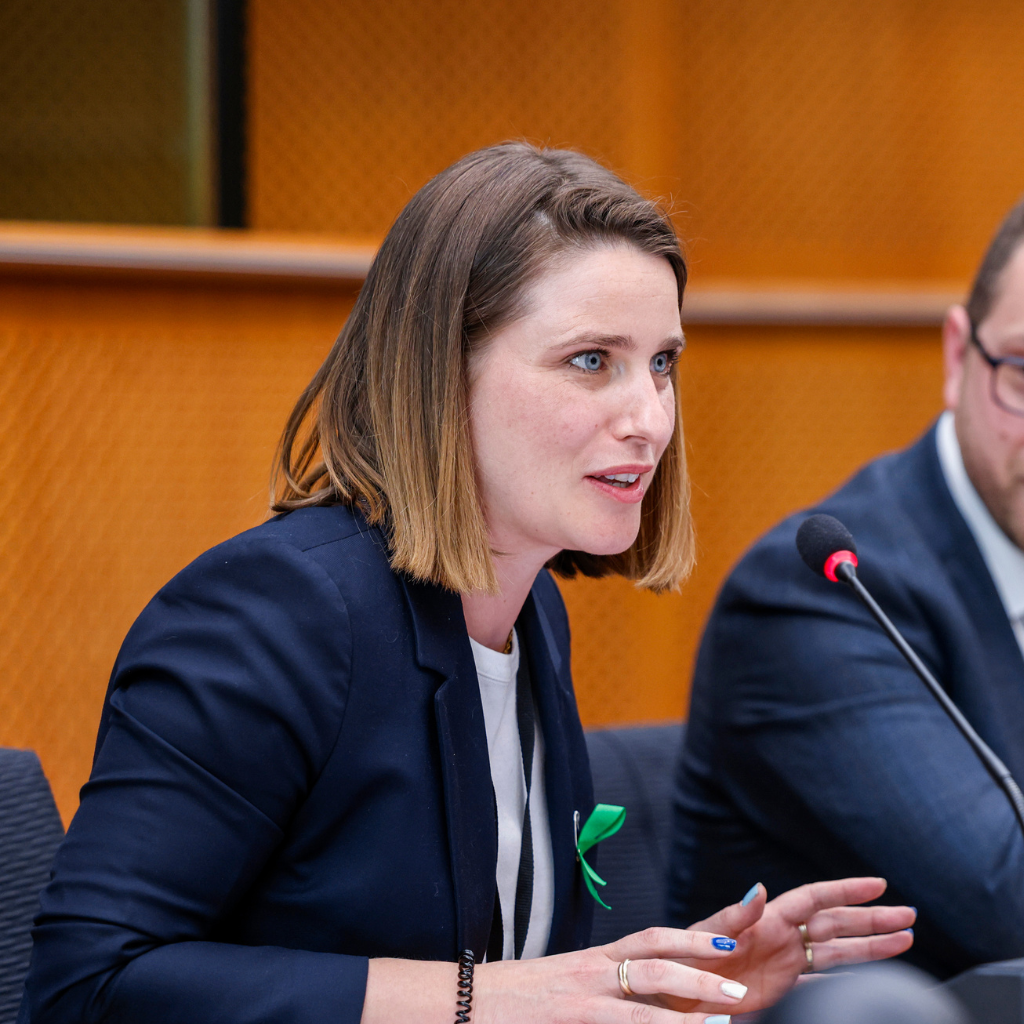
Camille Roux , She/Her
Policy Manager
For more information please contact
Stay connected
Get our latest news, personal stories, research articles, and job opportunities.