We Childproof Toys. Why Not Social Media?
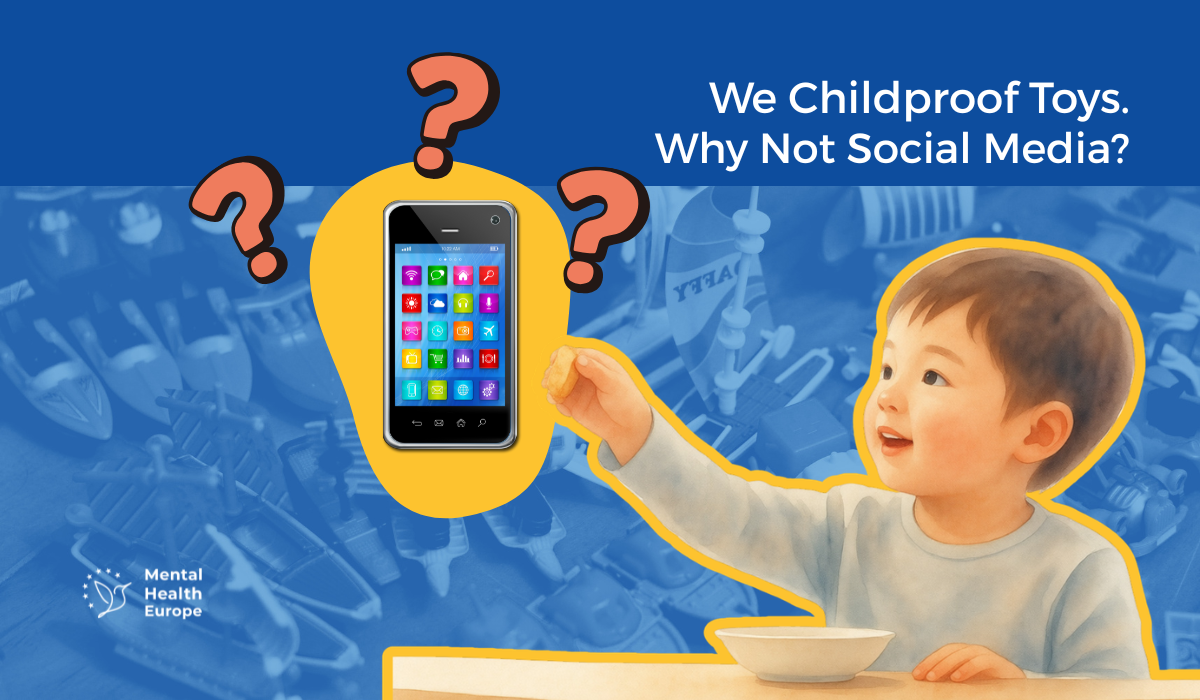
We childproof almost everything.
Plug sockets. Medicines. Cleaning products. Toys. Before these products reach children, we expect them to be safe by design.
If a toy left one in three children feeling stressed, anxious or excluded, it wouldn’t stay on shop shelves for long.
So why do we accept something different online?
Mental Health Europe has joined more than 140 organisations and experts in signing a letter, led by 5Rights, calling on the European Commission to require digital products to prove they are safe for children before they reach the market.
Children deserve the same level of protection online as they do offline.
That means moving beyond warning labels and parental controls to address the way platforms are designed. Features that encourage endless scrolling, recommendation systems that reward engagement above wellbeing, and manipulative design choices should not be the default experience for young people.
The evidence for action is no longer hypothetical.
The European Commission’s latest Eurobarometer surveyed more than 26,000 teenagers across all 27 EU Member States. One in three said social media leaves them feeling stressed, sad or excluded. Four in ten struggle to sleep or concentrate because of their time online. Nine in ten had encountered harmful or distressing content in just the previous three months. And the more time young people spend online, the greater these impacts become.
This isn’t simply about what children see online. It’s also about how platforms are built to keep them there.
Too often, the conversation focuses only on harmful content. That matters, but it is only part of the picture. The business model itself rewards attention. The longer young people stay online, the more time is taken away from the relationships and activities that protect their mental health.
The same Eurobarometer tells that story. Young people report spending less time with friends, family, hobbies and physical activity as screen time increases. While many say social media helps them feel connected, heavier use also leads to greater comparison with others and increased feelings of loneliness.
A platform that keeps a young person online while pulling them away from real-life connection cannot be considered harmless simply because it feels social.
Building safer digital environments is therefore only half the answer.
We must also invest in what screens have gradually displaced: youth clubs, community spaces, peer support, school counsellors and accessible mental health services. Technology should never replace the human relationships that help young people thrive.
The solutions are clear.
Digital services should demonstrate they are safe for children before they enter the market. Companies—not children, parents or teachers—should bear responsibility for reducing foreseeable risks. Harmful and addictive design features should be addressed at their source, not after harm has already occurred.
Because keeping children safe should never depend on luck. It should be built into the products they use from the very beginning.


Rayan Temara , He/Him
MHE Policy Officer
For more information please contact
Stay connected
Get our latest news, personal stories, research articles, and job opportunities.